Passing My PhD Viva and What Comes Next
A personal reflection on passing my viva, the core technical contributions of the thesis, and the kind of Research Scientist work I want to do next.
Machine Learning Engineer | Computer Vision PhD
Machine Learning Engineer with a PhD in Computer Vision and over five years of experience designing, training and evaluating deep learning systems for industry partners including Roku, Procter & Gamble and the German Aerospace Center (DLR). I am comfortable across the full loop, from dataset generation, experiment design and metric selection to production-quality engineering with CI/CD and experiment tracking.
My work spans robust and explainable deep learning, domain adaptation, synthetic-to-real generalisation, learned embeddings for picture-quality optimisation, and multimodal search with vision-language models. I have published research at CVPR and ECCV, including an ECCV Best Paper Award, and I am looking for roles that combine applied research with building and shipping ML systems.
Newcastle University, Autumn 2021 - 2026
Thesis: Robust and Explainable Deep Learning for Fine-Grained Visual Inspection in Anti-Counterfeiting Applications
PhD completed in 2026.
Industrial collaboration with Procter & Gamble; research informed production pipelines for retraining and quality control.
Newcastle University, Autumn 2018 - Summer 2021
Dissertation: Fine-Grained Image Classification Using Siamese Neural Networks and Detection of Unseen Classes
Roku - Advanced Development, Cambridge, UK, July 2026 - October 2026
Built a learned embedding of TV picture-quality settings for a differentiable, CNN-based settings optimiser, owning dataset generation, training design, metric selection and evaluation.
Improved output quality by +2 dB PSNR (up to +5 dB with embedding-guided refinement) and cut training time to about a third with mixed precision; presented results to Roku SVPs.
Worked in an agile team with GitLab CI/CD, MLflow, Jira and Confluence, making heavy use of agentic development tools.
German Aerospace Center (DLR), Sankt Augustin, April 2025 - July 2025
Built an end-to-end drone detection pipeline using YOLOv5 / PyTorch, improving synthetic-to-real robustness.
Generated large-scale synthetic datasets in Unreal Engine 5 & AirSim across varied weather domains and viewpoints.
Created automation tools for dataset generation, reducing manual workload and improving reproducibility.
Contributed to domain shift and synthetic data research; pipelines adopted for ongoing internal use.
Newcastle University, 2021-2026
Built systems to classify genuine and counterfeit consumer products from mobile phone images using real and synthetic imagery.
Studied model robustness under real-world issues including distribution shift, image quality degradation, blur, noise, and compression artefacts.
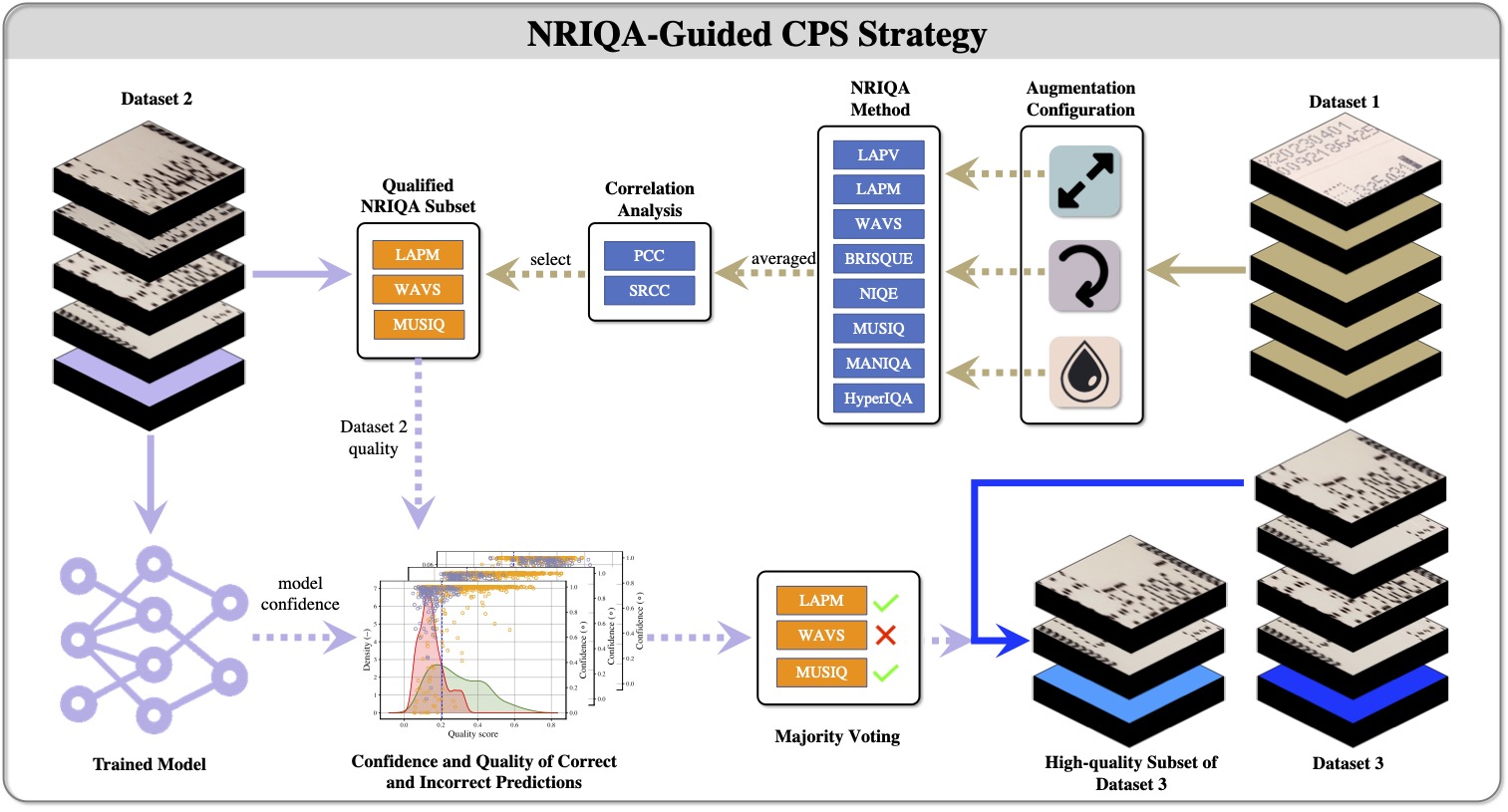
Developed image-quality filtering and Fourier-domain methods to improve fine-grained visual classification performance.
Developed explainable transfer-learning and augmentation-based model re-adaptation methods; an end-to-end anti-copy pattern system reached 99.49% accuracy on 980+ real-world samples.
Published at CVPR, ECCV, VISAPP, and Array; received Best Paper Award at the ECCV VISION Workshop.
Research informed production pipelines for retraining and quality control.
School of Computing, Newcastle University, 2021-2026
Demonstrated and marked across undergraduate and MSc modules including Deep Learning, Operating Systems, Software Engineering, Networking, Mathematics for Computer Science and Bio-Inspired Computing.
Supported MSc Deep Learning students with debugging, experiment design, and model evaluation.
Improved student proficiency in Neural Networks and Computer Vision experimentation.
Built and deployed a search app now in live use at a real paint-your-own pottery café: staff photograph pieces before firing and find them later from a plain-text description.
The pipeline captions photos with a vision-language model, embeds them for vector search (pgvector), and ranks matches by similarity; benchmarked VLM caption-then-embed against CLIP and a local Qwen2.5-VL, improving recall@1 from 0.45 to 0.60.
Full-stack delivery: TypeScript edge functions on Supabase/PostgreSQL, a mobile PWA, GitHub Actions and Netlify.
Received for An Augmentation-based Model Re-adaptation Framework for Robust Image Segmentation (VISION'24, Milan, Italy).
Certificate from the 2nd Workshop on Vision-based Industrial Inspection (in conjunction with ECCV 2024).
Authors: Joseph Smith, Zheming Zuo, Jonathan Stonehouse, Boguslaw Obara
Journal: Array
Year: 2025
Volume/Article: 29, 100643
DOI: 10.1016/j.array.2025.100643
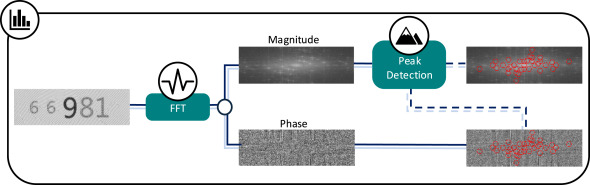
Authors: Zheming Zuo, Joseph Smith, Jonathan Stonehouse, Boguslaw Obara
Conference: European Conference on Computer Vision Workshops (ECCV), 2024
Award: Best Paper Award
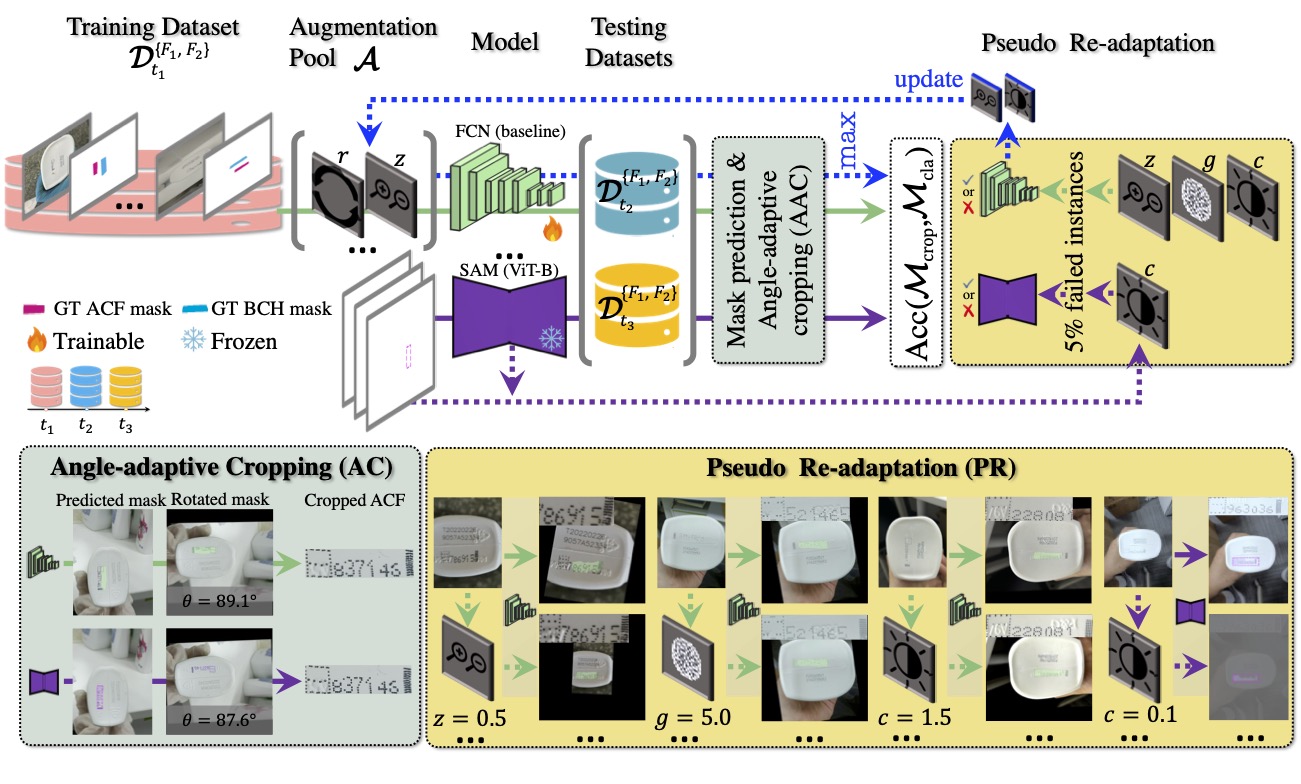
Authors: Zheming Zuo, Joseph Smith, Jonathan Stonehouse, Boguslaw Obara
Conference: IEEE/CVF Conference on Computer Vision and Pattern Recognition Workshops, 2024
Pages: 183--193

Authors: Joseph Smith, Zheming Zuo, Jonathan Stonehouse, Boguslaw Obara
Conference: International Joint Conference on Computer Vision, Imaging and Computer Graphics Theory and Applications, 2024
Pages: 448--457
Talk: An Augmentation-based Model Re-adaptation Framework for Robust Image Segmentation
Workshop: Vision-based Industrial Inspection (VISION) at ECCV 2024
Location: Allianz MiCo, Milan, Italy
Date: September 29, 2024
Workshop: The Fifth Workshop on Fair, Data-Efficient and Trusted Computer Vision (FEDCV)
Conference: CVPR 2024 Workshops
Location: Seattle Convention Center, Seattle, WA, USA (Room Arch 303)
Date: June 17, 2024
Conference: 19th International Conference on Computer Vision Theory and Applications (VISAPP 2024)
Location: Precise House Mantegna Roma, Rome, Italy
Date: February 27-29, 2024
Long-form technical notes and reflections from my PhD work, focused on robust deep learning, practical computer vision deployment, and what comes next after the viva.
A personal reflection on passing my viva, the core technical contributions of the thesis, and the kind of Research Scientist work I want to do next.
A detailed breakdown of no-reference image quality assessment, quality cut-off selection, and how targeted filtering improved FGVC reliability in mobile-image settings.
A practical guide to model update strategy selection, catastrophic forgetting risk control, and augmentation-driven segmentation re-adaptation under temporal drift.